





The Garden Route is one of South Africa’s best-known self-drive routes, but travellers looking to venture further inland will find plenty of reasons to continue north. The N9 offers a scenic journey through mountain passes, historic Karoo towns and landscapes that seem to stretch endlessly towards the horizon.
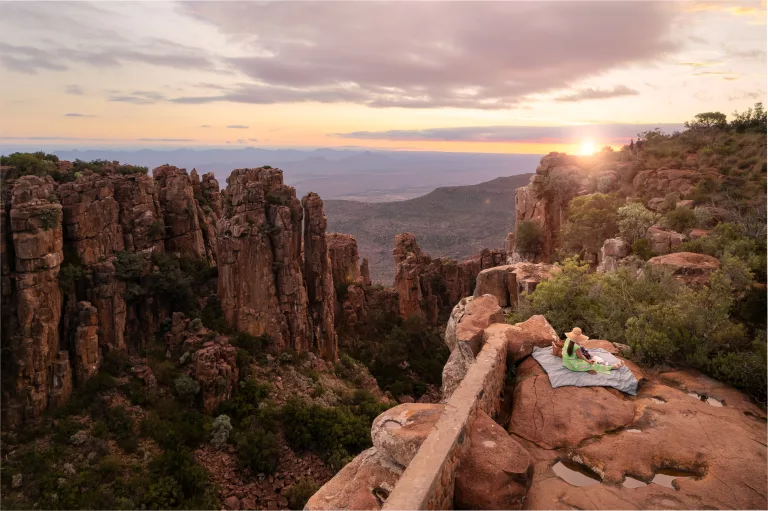
Image: Supplied/3 Sixty Photography
Running from George towards Graaff-Reinet, the route takes motorists away from the familiar coastal scenery and into the heart of the Great Karoo. Along the way, there are unusual roadside attractions, fascinating heritage sites and opportunities to explore some of the Eastern Cape’s lesser-known destinations.
The timing is particularly interesting for Graaff-Reinet, which celebrates its 240th anniversary in 2026. Founded in 1786, it is South Africa’s fourth-oldest town and makes an appealing destination for travellers wanting to extend their Garden Route holiday.
A scenic drive through four mountain passes
The journey from George to Graaff-Reinet covers approximately 400km on tarred roads, making it a manageable addition to an Eastern Cape or Garden Route itinerary. Rather than rushing to the final destination, however, the N9 rewards travellers who allow time for detours and stops along the way.
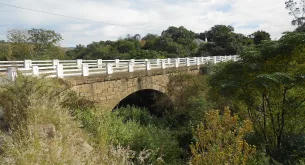
Leaving George, the road climbs through the Outeniqua Pass before continuing across the Potjiesberg, Buyspoort and Perdepoort passes. The scenery gradually changes from mountain landscapes to the expansive, open plains of the Karoo.
Willowmore is one of the first worthwhile stops. The small town serves as an access point to the Baviaanskloof, a spectacular wilderness area forming part of the Cape Floral Region UNESCO World Heritage Site. It is popular with hikers, nature enthusiasts and 4×4 travellers looking to explore its rugged landscapes.
Further along the route, Aberdeen offers a particularly unusual collection of architectural and historical attractions.
Aberdeen’s rooftop dragons and unusual history
One of the town’s most recognisable landmarks is its former post office, dating back to 1898. Look up and you will spot terracotta dragons decorating its roof, an unexpected architectural detail in the middle of the Karoo.
Another notable building is Pagel House, an 1897 mansion associated with the town’s ostrich-feather boom. Its history is equally unusual. The property was renamed by former zoo owner Frank Wilke, who admired circus strongman Wilhelm Pagel and acquired animals from the Pagel Circus.
Aberdeen also has an extraordinary wedding story. In 1954, a couple reportedly exchanged vows inside a lion cage, with seven lionesses serving as bridesmaids.
These unexpected stories make the town worth exploring rather than simply passing through on the way to Graaff-Reinet.
ALSO READ:
KwaMaqoma: The Eastern Cape destination getting a new tourism hub
Graaff-Reinet: A Karoo town worth slowing down for
Founded in 1786, Graaff-Reinet is known for its Cape Dutch architecture, historic streets and concentration of heritage buildings. With more than 220 heritage sites, many of its attractions can be explored on foot, making a guided walking tour a good way to discover the town’s history.
One of its most recognisable landmarks is the five-star Drostdy Hotel, housed in a historic building originally constructed between 1804 and 1806 as the residence and administrative headquarters of the local landdrost.
The building was acquired by the Rupert Family Foundation in 2012 and reopened in 2014 following an extensive restoration. Today, its 48 rooms are spread across three precincts, including restored 19th-century cottages in Stretch’s Court.
Facilities include three swimming pools, a spa and the Imibala Gallery. The hotel’s restaurant, De Camdeboo, serves dishes celebrating regional ingredients, including Karoo lamb.
The hotel also has a community-focused purpose. It was donated to the non-profit South African College for Tourism, which provides hospitality training to young people, particularly women from rural communities.
Explore the Valley of Desolation and Karoo’s fossil history
Beyond its historic town centre, Graaff-Reinet is an excellent base for exploring the surrounding natural attractions.
Camdeboo National Park almost encircles the town, with one of its most spectacular features being the Valley of Desolation. Located approximately 14km from Graaff-Reinet, the valley is known for its towering dolerite columns, some reaching heights of 120m above the surrounding plains.
The geological formations provide dramatic views across the Karoo, particularly towards sunset. The park is also home to Cape mountain zebra and more than 220 recorded bird species.
Another worthwhile stop is Karoo Origins: The Fossil Centre, which opened in April 2025. The exhibition features more than 850 fossil skulls, including 107 holotypes from the Rubidge Fossil Collection.
Holotypes are the original fossil specimens used to formally describe and identify a species. The collection offers visitors an opportunity to explore the region’s remarkable prehistoric history, including evidence of the end-Permian mass extinction around 252 million years ago.
Make time for Nieu-Bethesda’s Owl House
About 50km north of Graaff-Reinet, the small village of Nieu-Bethesda offers another worthwhile detour.
Here, visitors can explore the famous Owl House, the former home of artist Helen Martins. The property is filled with colourful glasswork, cement sculptures and unusual figures, including owls, camels and human forms.
Martins transformed her home and garden into an extraordinary artistic environment, making it one of the Eastern Cape’s most distinctive cultural attractions.
Planning an N9 road trip
The N9 is a practical addition to a Garden Route self-drive, especially for travellers who want to experience a different side of the Eastern Cape.
A suggested itinerary starts in George, travelling north through Uniondale, Willowmore and Aberdeen before spending two or three nights in Graaff-Reinet. From there, travellers can continue towards Addo Elephant National Park and Gqeberha.
The drive from George to Graaff-Reinet is approximately 400km, while the onward journey to Addo is around 250km.
Spring (September to November) and autumn (March to May) are particularly appealing seasons for the journey, with generally milder daytime temperatures and clear Karoo skies.
Travellers should plan driving days in daylight, refuel in towns along the route and allow extra time for scenic stops. Those planning to explore the Baviaanskloof should consider a high-clearance vehicle or 4×4, depending on their intended route.
With mountain passes, unusual historical stories, remarkable geological formations and a fascinating collection of small-town attractions, the N9 offers a compelling reason to take the road less travelled.
Follow us on social media for more travel news, inspiration, and guides. You can also tag us to be featured.
Instagram | Facebook | Twitter | Spotify
ALSO READ:
A December escape to the Breede River Valley: The quieter corners beyond the wine route